November 2 , 2026
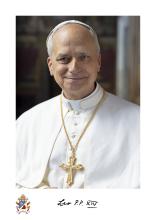
The prospect of the federal government questioning the Catholic Church's nonprofit religious tax exemption because Pope Leo XIV participated in the American midterm elections raises an important question about the relationship between government authority, religious institutions, and individual political freedom.
Before such a controversy develops into another partisan confrontation, it is worth establishing a fundamental distinction: A religious leader exercising the right to vote is not the same as a religious institution endorsing a political candidate.
Pope Leo XIV's participation in the American electoral process is an exercise of individual citizenship. It does not, by itself, constitute an endorsement by the Catholic Church, an institutional campaign contribution, or an attempt to direct the votes of American Catholics. The distinction matters, both legally and constitutionally.
The First Amendment protects the free exercise of religion and prohibits the government from establishing an official religion. Those protections are not limited to religious beliefs expressed privately. They also encompass the ability of religious leaders and institutions to participate in public conversations, address moral questions, and encourage civic engagement.
The federal tax code, meanwhile, establishes conditions for organizations seeking recognition under Section 501(c)(3). The Johnson Amendment restricts these organizations, including churches, from participating or intervening in political campaigns on behalf of or in opposition to candidates.
That restriction concerns organizational conduct. It should not be casually extended to the personal voting decisions of individual clergy members, religious leaders, or members of their congregations.
The distinction becomes especially important when considering the Catholic Church, an institution with a global religious mission and a substantial presence in American communities. Catholic parishes, schools, hospitals, charitable organizations, and social-service programs serve millions of people, regardless of their political affiliations.
The Church's public positions on immigration, poverty, healthcare, human dignity, war, and other social questions are often relevant to national policy discussions. Whether people agree with those positions is a separate matter from whether the government should respect the institution's right to express them.
Tax-exempt status should be administered according to established legal standards, not political disagreements or assumptions about the voting preferences of religious leaders.
There is also a broader principle at stake. If a government were to threaten a religious institution's tax status because an individual religious leader exercised a personal right to vote, it would raise serious questions about consistency, fairness, and the boundaries of governmental authority.
The same standard must apply across religious traditions. Catholic, Protestant, Jewish, Muslim, and other religious communities should not face different treatment because of their leaders' perceived political preferences. Nor should religious organizations receive immunity from generally applicable tax laws simply because they are religious.
This is not an argument for exempting churches from every restriction governing nonprofit organizations. It is an argument for distinguishing legitimate enforcement of tax law from government action based on an individual's constitutionally protected conduct.
A pope casting a ballot is not, in itself, a church endorsing a candidate. Keeping that distinction clear is essential to an impartial application of the law and to preserving the separation between government authority and religious life.
The question should never be whether a religious leader's vote pleases the government. It should be whether the government is applying the same constitutional and statutory standards to everyone.
Copyright © 2026. All rights reserved.